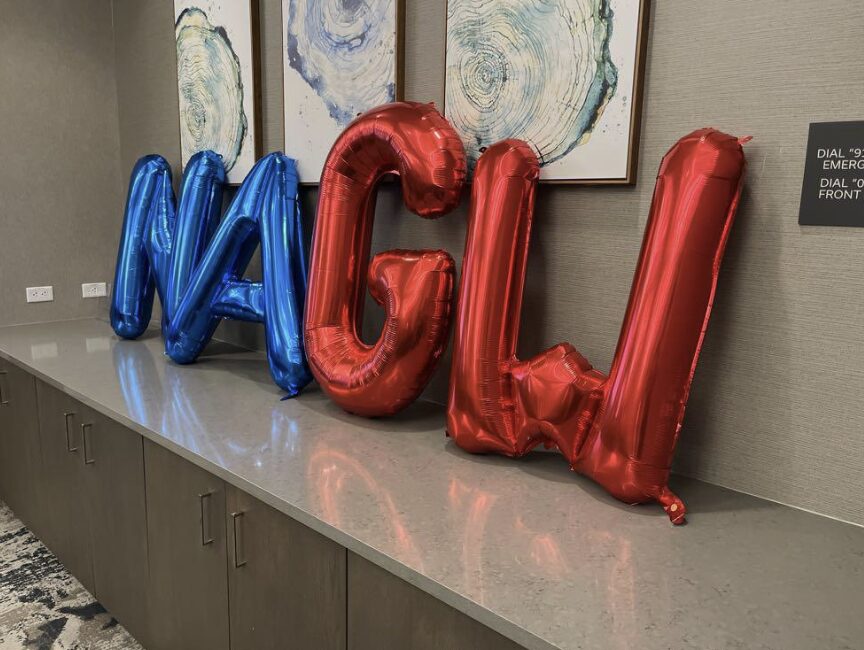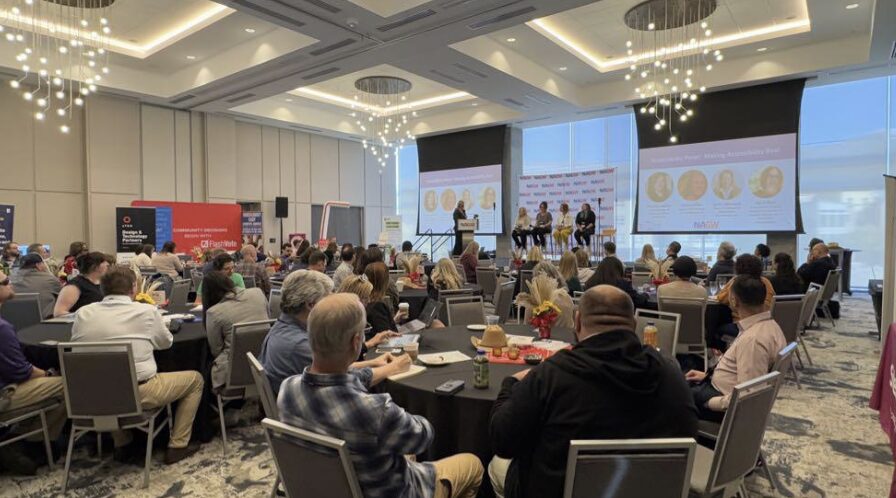

NAGW 2025: Digital Government in Action
NAGW 2025: Digital Government in Action
Every year, the National Association of Government Web Professionals (NAGW) brings together a community of digital practitioners — developers, IT professionals, content strategists, designers, project & program managers — the people who design, build, and maintain the digital infrastructure for cities, counties, and state agencies.
This year, NAGW 2025 was held in Denver, where Blind Institute of Technology (BIT) was founded. BIT was thrilled to support this amazing partner!
Supporting Digital Government
Background: Local and state governments are typically organized as a loose federation of departments and programs. However, most residents and business owners view their government differently: as a series of inter-related services. Transforming dozens of independently-run organizations into a unified online citizen experience is a herculean challenge.
The digital professionals in charge of this effort are talented, dedicated, and animated by their work. However, many public sector digital teams are under-resourced and underfunding digital teams has been a compounding problem for the public sector since the beginning of the digital age in the 90s. As was noted at the recent DenAI Summit, government was slow to embrace the internet, a decision that left a mountain of technical debt yet to be paid.
Digital public servants have to navigate a labyrinth of platforms, vendors, and “solutions”
The digital footprint for each of the 90,000+ localities across the United States includes thousands of PDFs. Typically, a municipality’s public-facing user experience is woven together from a tapestry of dozens, sometimes hundreds, of custom-built websites, applications, and third-party SaaS platforms. In addition to managing these platforms, content is produced by teams siloed across multiple departments 24/7.
NAGW is a resource hub and community of digital professionals taking on these challenges. This was BIT’s first time at a NAGW conference, and we experienced first-hand how this community welcomes and embraces newcomers.
Why NAGW 2025?
Earlier this year, BIT and NAGW collaborated on a webinar series focused on digital accessibility and upcoming ADA Title II deadlines.
Getting digital accessibility right is top priority to NAGW and its membership. Our first webinar collaboration was standing room only — we maxed the number of attendees the video software would handle! The webinars, led by BIT’s James Warnken, drew so much interest because of the Department of Justice (DOJ) “final rule” on ADA Title II.
In April 2024, the DOJ set a deadline for state and local governments to ensure that all digital content and services — including PDFs, government websites, and all third-party platforms — are accessible. The DOJ set the accessibility standard, WCAG 2.1 AA, for minimum compliance, and set deadlines for April 24, 2026, or April 26, 2027 for localities serving under 50,000 people.
Hot Topics: Accessibility & AI
Most of the conference sessions and panels discussed one of three topics: accessibility, AI, or both.
Most localities have yet to formalize their AI policy. AI presents an entirely new frontier for accountability and transparency, and government agencies need answers to some foundational questions:
- Should prompts be made available under Freedom of Information Act (FOIA) requests?
- What levels of human oversight are appropriate for AI-assisted decisions that impact benefits, or access to services?
- How will agencies verify the contextual accuracy and accessibility of AI-generated content before it’s published?
In terms of the other big topic at the conference — digital accessibility, and imminent ADA Title II deadlines — we heard one common thread: PDFs remain the #1 source of grief. One attendee we met shared how they were able to reduce their PDF inventory from 18,000 PDFs down to 2,000, with the goal to get under 1,000.
There was a lively discussion on PDF management led by Leslie Labrecque from the City of Boulder. Often, public servants in charge of ensuring content accessibility have no mechanism in place to enforce it. In other words, if a content editor at a satellite department or program doesn’t test their PDFs, there’s no accountability. The City of Boulder has closed this accountability gap: policies require digital accessibility for all content created on behalf of the City.
Like all of NAGW 2025 sponsors, BIT’s table was in an ideal location. We enjoyed meeting everyone who stopped by our table, and had many informal “hallway sessions.” Most of the people we met are just starting large-scale accessibility projects. They’re at first steps, like auditing content to determine where Title II applies, and the level of effort to remediate issues. Several digital practitioners admitted they were just learning about the Title II deadline for the first time from their peers at the conference.
Even for teams with mature accessibility practices, there are a number of factors that work against meeting the ADA deadlines: getting buy-in from leadership on remediation, training, and usability testing projects. Budget constraints are holding back some digital accessibility initiatives, or others are held back by non-technical leadership that may not appreciate the level of effort required to become end-to-end WCAG 2.1 AA compliant across a city’s entire digital ecosystem.
Planning Digital Projects
BIT contributed to NAGW 2025 with our session, “Planning Successful Digital Projects.” This session uncovered common pitfalls in large-scale digital projects such as document remediation, website redesigns, digital transformations — and showed how to get in front of them with project management tools and practices to mitigate risk, manage scope, and facilitate communication. The talk was followed by an active Q&A.
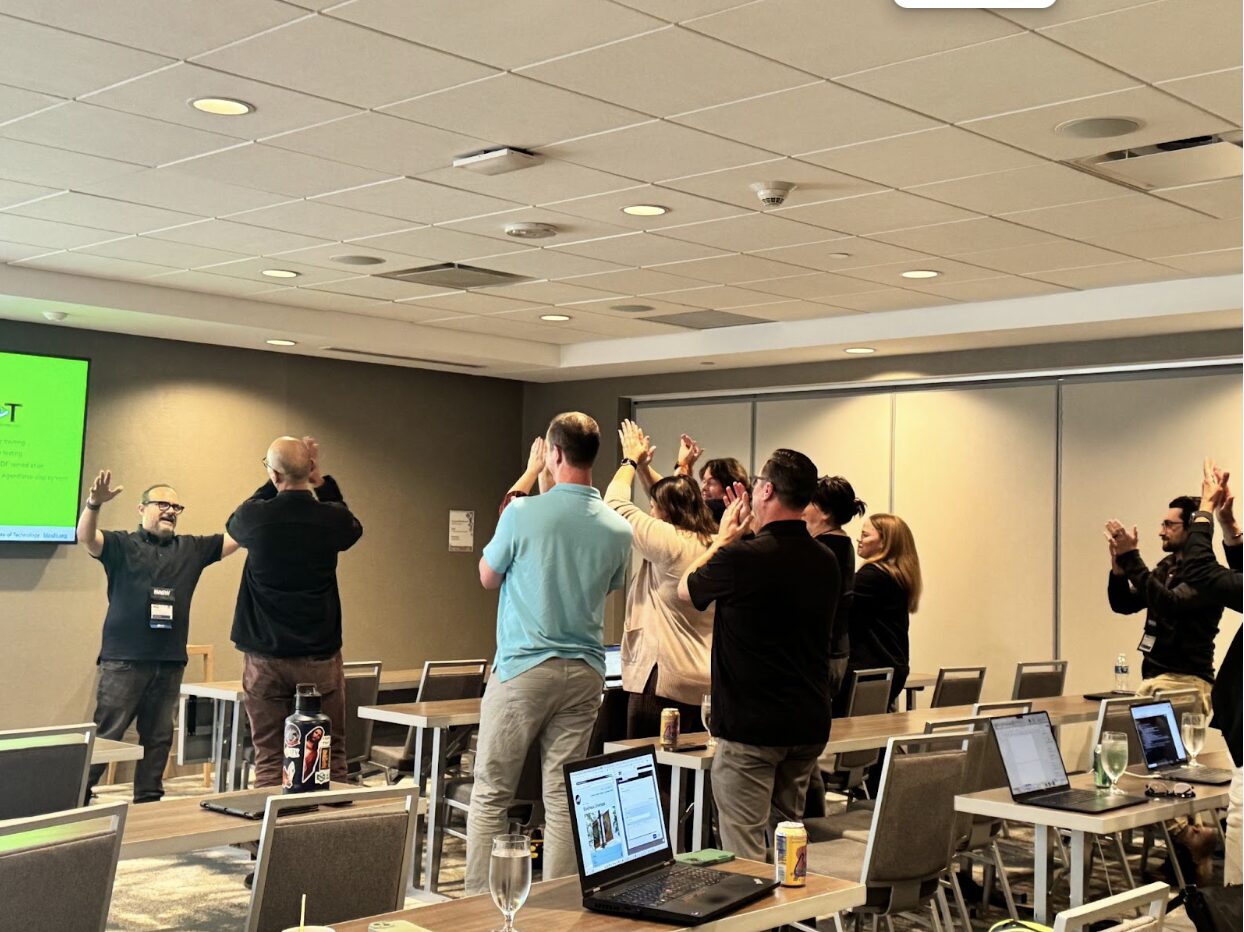
Thank you to everyone who attended the talk!
NAGW 2025 Takeaways
NAGW 2025 was a small-but-mighty conference. It’s a welcoming community of subject matter experts and digital teams that connects us with government services, critical information, and civic engagement.
- With some notable exceptions, policy remains a blocker to widespread adoption of AI.
- ADA Title II deadlines: PDFs remain the #1 source of grief.
- NAGW is an amazing community! BIT can’t wait for NAGW 2026!
About the Writer
Joe Crespo is a web developer, user experience expert, and technical project manager who has led large-scale digital transformation, content modernization, and document remediation initiatives for government, nonprofits, higher education, and the Fortune 1000.
Today, Joe is BIT’s Business Development Director, where he works with government agencies, and partners advancing AI, accessibility, and workforce equity.
Photos from the conference