The Big Takeaway: MCN helps Minnesota nonprofits find their feet with AI, wrangle data, and adapt to changes in donor behavior.
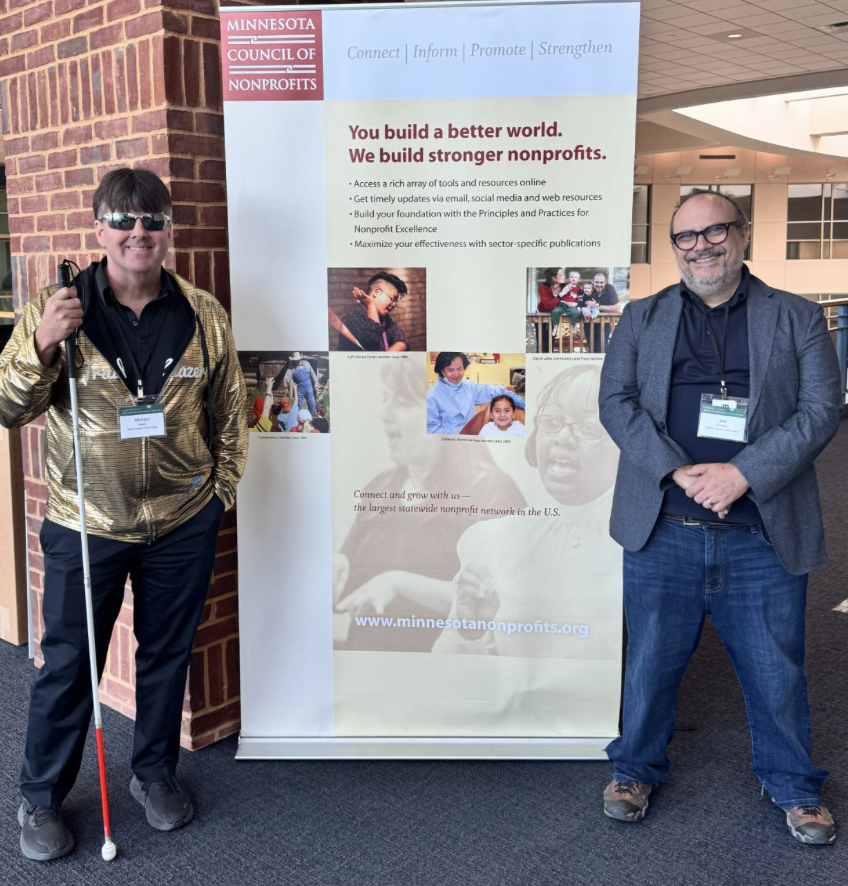
Recently, I attended my first Minnesota Council of Nonprofits (MCN) conference, it was MCN’s summer fundraising summit held at the Saint Paul RiverCentre. Great conference, amazing people, and inspiring talks.
I understand what Minnesota fundraisers are up against. I run a small nonprofit. In addition, BIT provides Salesforce engineering services, and my team supports, and refines fundraising and marketing efforts for many small and midsize nonprofits.
Getting fundraising right is an urgent need, especially in Minnesota, where more than half (53%) of nonprofits reported a decrease in foundation grants, according to MCN’s own 2025 Current Conditions report.
I heard three recurring themes in the MCN sessions I attended, and from the people I met in informal “hallway sessions”: donor expectations have changed, AI can deepen member/donor engagement, and data management is fundamental to scaling AI growth.
Two Different Talks, One AI Thread
Two standout sessions really spoke to me. Together, they tell a story.
Sarah Price from BWF Zuri had a session, “Stop Fearing the Robot,” focused on how an individual contributor can combine AI and their expertise to massively improve decision-making, work deliverables, and productivity. She covered using tools like ChatGPT for prospect research, mapping relationships, and qualifying opportunities. Sarah also spent time on where those tools fail, and strategies for catching hallucinations, overconfidence, and misattributed information.
Quick aside, but the context is important: I’ve always thought it’s perfect that the quote, “Good artists borrow. Great artists steal,” has many authors; it’s been attributed to T.S. Elliot, Picasso, Igor Stravinsky, Steve Jobs, and Mike Hess. By the end of Sarah’s talk, my colleague, Joe Crespo, had bruised ribs from all the times I elbowed him saying, “We should steal that!”
Tim DeCelle from Saint Mary’s University of Minnesota (alumni website) presented “Demystifying Generational Assumptions: A Data-Driven Fundraising Strategy.” The talk was about how to read meaningful giving patterns in data.
Tim’s talk was a show-don’t-tell clinic about how phenomenal data management delivers real, ongoing value for St. Mary’s. He’s using AI and SQL analytics to develop an innovative affinity scoring model for donors, and his work produced some surprising results. For example, recent university graduates are typically considered a low-priority for most university fundraising teams, but Tim’s data showed that St. Mary’s Gen Z and Millennial graduates — the most recent graduate cohorts — are already giving in new ways, like giving through crowdfunding campaigns.
The Common Thread: AI Needs Good Data
The connection between these two MCN talks is that AI needs good data to be a catalyst. At the individual contributor level, good data means expertise and judgement. At the organizational level, good data means connected systems, API-first architecture, AI policy, security controls, and governance.
Many nonprofits struggle with AI adoption because they lack the data infrastructure to scale it. Until very recently, connected systems, automations, and clean data were often considered nice-to-haves for small and midsize nonprofit fundraising teams. Now they’re mission-critical.
BIT’s Salesforce engineers have experienced firsthand how good data management impacts our clients’ ability to share their message and carry out their mission. Before AI, poor data management carried hidden, but largely containable, costs: manual workarounds, hunch-driven decision-making, accumulating technical debt, or friction in the donor-facing user experience. With AI, the stakes are much higher: good data management defines an organization’s ability to scale alongside peers.
Good Data Doesn’t Expire
I’ve heard it said that AI tools are like the light from an aging star: by the time its light reaches you, that star is already dead.
Yes, AI technology moves at breakneck speed. The tools, the models, the features, the vendors — all of it was different last year, and all of it will be different next year. What doesn’t change is the data plumbing needed to scale AI across an organization.
AI is a game-changer for Minnesota nonprofits, and the organizations that will get the most out of it are investing in good data management now. A well-connected Salesforce instance for managing donors provides guardrails and data infrastructure that stays with you every time a new AI tool shows up.
Thank You, MCN!
Thank you to MCN for putting together a fantastic day, and to every speaker who came ready to share their expertise. All of you brought your A-Game!
Thank you to the people of the City of Saint Paul who showed me that “Minnesota Nice” is a genuine virtue — I could not have felt more welcome.
And finally, thank you to the State of Minnesota for investing in professionals with disabilities. You got us in the room. We’re glad to be here, and we’re just getting started.
Is Your Donor Data Ready for What’s Next?
If you want to better engage with donors, we’re Salesforce automation, data management, AI, and integration experts. BIT offers a free review, no obligation. Let’s talk about your data.