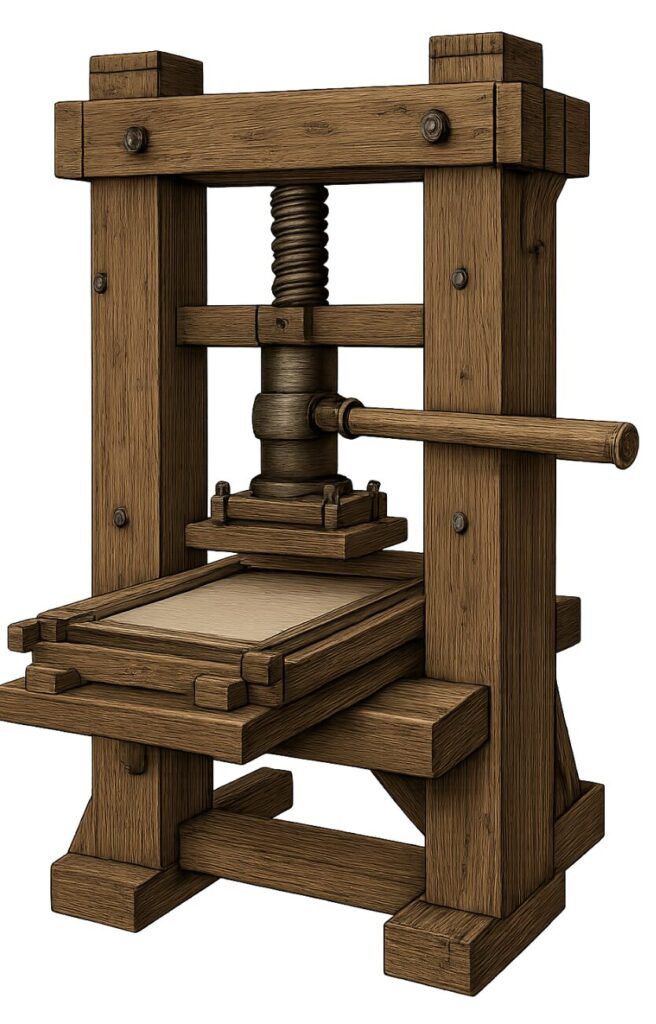
When the printing press arrived in the 15th century, the educated elite panicked. They feared the knowledge they had controlled was about to reach people they deemed unfit to use it. They were right to be afraid. What followed was the rise of democracy, the scientific revolution, and a cultural renaissance that redefined what it means to be human.
Technological advancements that expand access change the world for good. AI is that technology now. For professionals with disabilities, this is not an incremental improvement. It is a structural shift that, like the printing press, levels the playing field.
Recently, Simon Sinek gave a talk at IAMPHENOM about how AI is already changing the workforce. Sinek’s view is that the most important thing we need to cultivate as professionals is “being human.”
Sinek has long championed community, mentorship, and the importance of building a network. Adding to that theme in his recent talk, Sinek says AI makes it critical to develop our human abilities: how to manage difficult conversations at work, how to give and receive useful feedback, and how to develop ourselves as leaders. In this respect, the disability community has a huge head start. We have spent careers navigating unusable systems, finding solutions when half-measures didn’t deliver, and advocating for ourselves in rooms that weren’t expecting us.
AI also presents new challenges that the job market needs to reckon with. AI-powered software moves barriers out of the interface and into the algorithm, where they’re harder to find and harder to fix. It’s relatively easy to catch and remediate issues in the user interface — like missing alt-text on an image, or a popup menu that doesn’t work on a screen reader — however, it’s much more difficult to diagnose a problematic algorithm built on flawed data. For a job seeker with a disability, this means an AI-powered HR system may be working against them from the start.
AI systems learn from historical data—and that data reflects past employment practices. When a hiring system is trained on decades of employment records in which individuals with disabilities had limited representation, it can learn to replicate those patterns. In 2024, a University of Washington study confirmed this: ChatGPT consistently ranked resumes with disability-related honors and credentials lower than identical resumes without them.
This is why it’s important to understand how these tools actually work. Large language models assemble responses by combining your prompts with patterns learned from vast amounts of human-generated text. They are extraordinarily good at finding patterns, generating language, and moving fast.
The technology is mesmerizing, making it easy to forget that computers are profoundly ignorant. They lack judgment and any sense of proportionality. They need a smart director asking the right questions and providing clear guidance. When we stop treating AI as an authority and start treating it as a collaborator, we become unstoppable.
I founded BIT to give the next generation of technologists with disabilities the same opportunities that were given to me. Most engineers from my generation built careers on acquiring skills, but this next generation of techies will build careers on understanding problems, and knowing how to direct powerful tools toward solving them. For professionals with disabilities, this is our moment.
AI needs a smart director. Let’s get you certified.
The BIT Academy provides fully subsidized training and job placement for professionals with disabilities, including our certification program for Agentforce, Salesforce’s AI agent platform.